- Home
- News
- Failure Analysis
- How Hard Chrome Bar Wear Causes Hydraulic Cylinder Leaks


How Hard Chrome Bar Wear Causes Hydraulic Cylinder Leaks
Quick Answer: Hydraulic cylinder seals rarely fail on their own. Leakage is usually a symptom of a damaged hard chrome plated bar, worn cylinder tube, oil contamination, poor installation, or excessive side loading. Replacing the seal without checking these components often leads to repeat leaks.
Hydraulic cylinder seal leakage is one of the most common causes of equipment downtime. While worn seals are often blamed, the real problem frequently lies elsewhere — in the metal components, the oil condition, or the installation. Understanding the true cause helps maintenance teams avoid repeated repairs.
What Are the Symptoms of a Leaking Hydraulic Cylinder?
Seal leakage usually begins with small warning signs before developing into major failures:
- Oil leaking around the hard chrome plated bar gland
- Oil film on the hard chrome bar after every stroke
- Reduced cylinder force or unstable movement
- Pressure loss and slower operating speed
- Dirt sticking to oily bar surfaces
- Increased hydraulic fluid consumption
Ignoring these signs can lead to internal leakage, lower efficiency, or complete cylinder failure.
What Causes Hydraulic Cylinder Seal Leakage?
Seal failure is rarely caused by the seal alone:
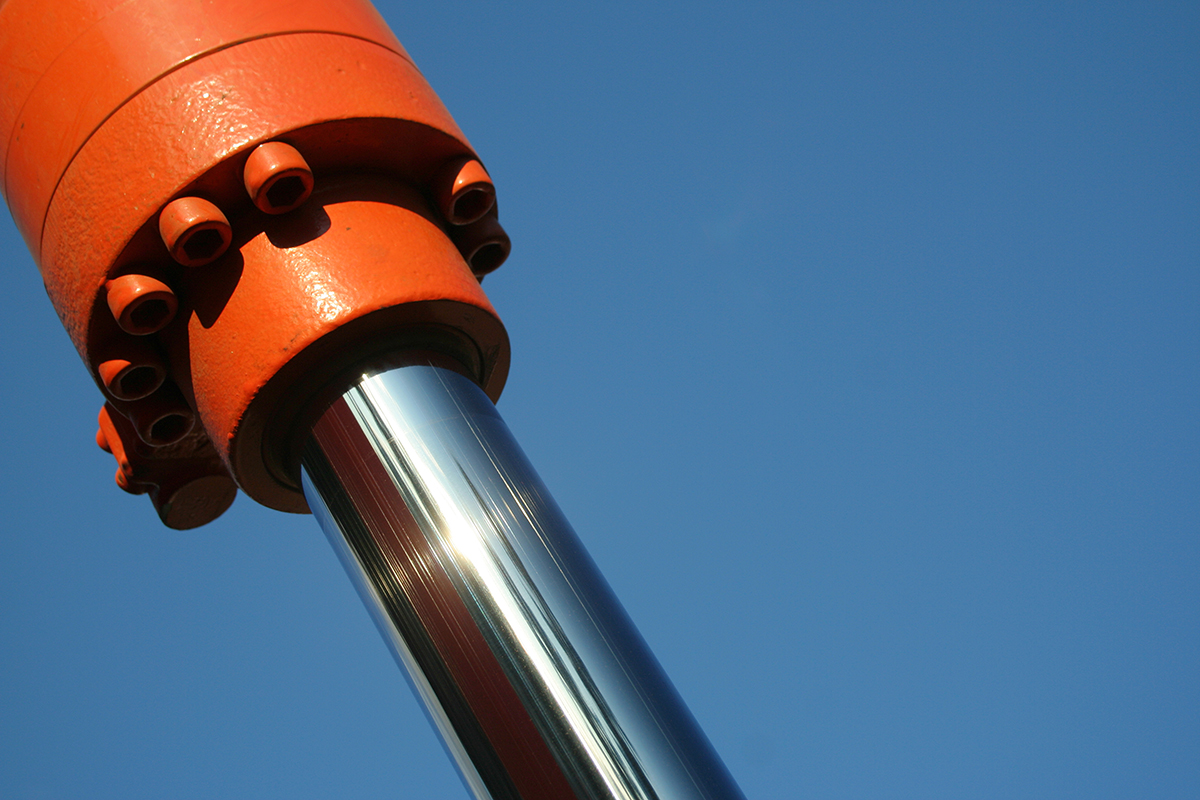
- Damaged or worn hard chrome plated bar— Scratches, corrosion, or dents damage the seal lip during reciprocating movement. Hard chrome bars are commonly specified with a surface roughness around Ra ≤ 0.2 μm and a hard chrome layer roughly 15–20 μm thick at 800–1000 HV hardness; bars that fall outside these specs tend to wear seals faster.
- Worn or damaged cylinder tube — Wear, scoring, rust, or poor roundness cause uneven seal loading.
- Hydraulic oil contamination — Metal particles and dust act as abrasives on seals and metal surfaces. Most industrial hydraulic systems target an oil cleanliness around ISO 4406 18/16/13; oil that falls outside the specified code accelerates both seal and hard chrome bar wear.
- Incorrect installation or seal selection — Wrong orientation, dimensions, or material can cause early leakage.
- Excessive side load or misalignment — Bent bars or misaligned mountings increase friction and reduce seal life.
How to Inspect a Hydraulic Cylinder for the Real Cause of Leakage
A systematic inspection determines whether the seal or another component has failed:
- Inspect the hard chrome plated bars for scratches, corrosion, chrome peeling, or dents.
- Measure rod straightness and surface roughness.
- Check the cylinder tube for scoring, wear, ovality, or corrosion.
- Inspect the removed seal for uneven wear, cuts, or hardening.
- Analyze hydraulic oil for contamination or metal particles.
- Verify operating pressure, temperature, and alignment.
Combining these checks gives a more accurate diagnosis than replacing the seal alone.
How to Prevent Hydraulic Cylinder Seal Failure
Corrective action should address the seal and the components affecting it:
- Replace damaged seals with the correct material and size.
- Repair or replace scratched hard chrome bars and worn cylinder tubes.
- Improve hydraulic filtration to reduce contamination.
- Confirm correct cylinder alignment during installation.
- Avoid overload and excessive side loading.
- Schedule regular inspection and preventive maintenance.
Precision hard chrome plated bars and honed or skiving and roller burnishing cylinder tubes also support longer seal life.
When Should You Replace the Hard Chrome Bar or Cylinder Tube?
Replacing only the seal may not solve the problem if the metal components are already damaged.
Replace the hard chrome plated bar when:
- Chrome plating is peeling or heavily corroded.
- Deep scratches or dents cannot be polished out.
- The bar is bent beyond allowable tolerance.
Replace the cylinder tube when:
- Internal scoring is severe.
- Corrosion or pitting affects the sealing surface.
- Roundness or straightness exceeds specification.
Installing new seals on damaged components often leads to repeated leakage and unnecessary costs.
Why Small Leaks Are Expensive to Ignore
The repair itself is rarely the biggest cost. Replacing a worn seal might only cost around $50 in parts, but the equipment downtime from a repeat failure — production stopped, a technician dispatched, the machine offline for a full shift — can easily run $5,000 or more per day, depending on the operation. Treating a leak as a root-cause investigation rather than a quick seal swap is usually the cheaper path in the long run.
Frequently Asked Questions about Hydraulic Cylinder Seal Leaks
1. Why do hydraulic cylinder seals leak?
Usually a damaged hard chrome bar, worn tube, contaminated oil, poor installation, or side loading — not a defective seal alone.
2.What are the first signs of a hydraulic cylinder leak?
Oil around the rod gland, an oil film on the rod, reduced force, slower speed, and dirt on the hard chrome plated bar.
3.How do I find the real cause instead of just replacing the seal?
Inspect the hard chrome plated bar and cylinder tube for damage, check oil for contamination, and verify alignment first.
4. How can I prevent hydraulic cylinder seal failure?
Use correctly sized, compatible seals, keep oil clean, confirm alignment, and inspect regularly.
5.Should I replace the hard chrome plated bar or just the seal?
Replace the hard chrome plated bar if chrome is peeling, corroded, deeply scratched, or bent — a damaged rod wears out a new seal quickly.
Conclusion
Replacing a leaking seal without checking the bar just starts the clock on your next downtime. Evaluating the hard chrome plated bar, cylinder tube, oil, installation, and operating conditions helps maintenance teams identify failures and prevent recurring leaks. High-quality hard chrome plated bars and precision cylinder tubes help protect seals and extend hydraulic cylinder service life.
Dealing with a hydraulic cylinder leak or worn hard chrome plated bar or cylinder tubes?
Contact our engineering team for an inspection consultation, or request our high-precision hard chrome plated bars and cylinder tubes specification sheet.